

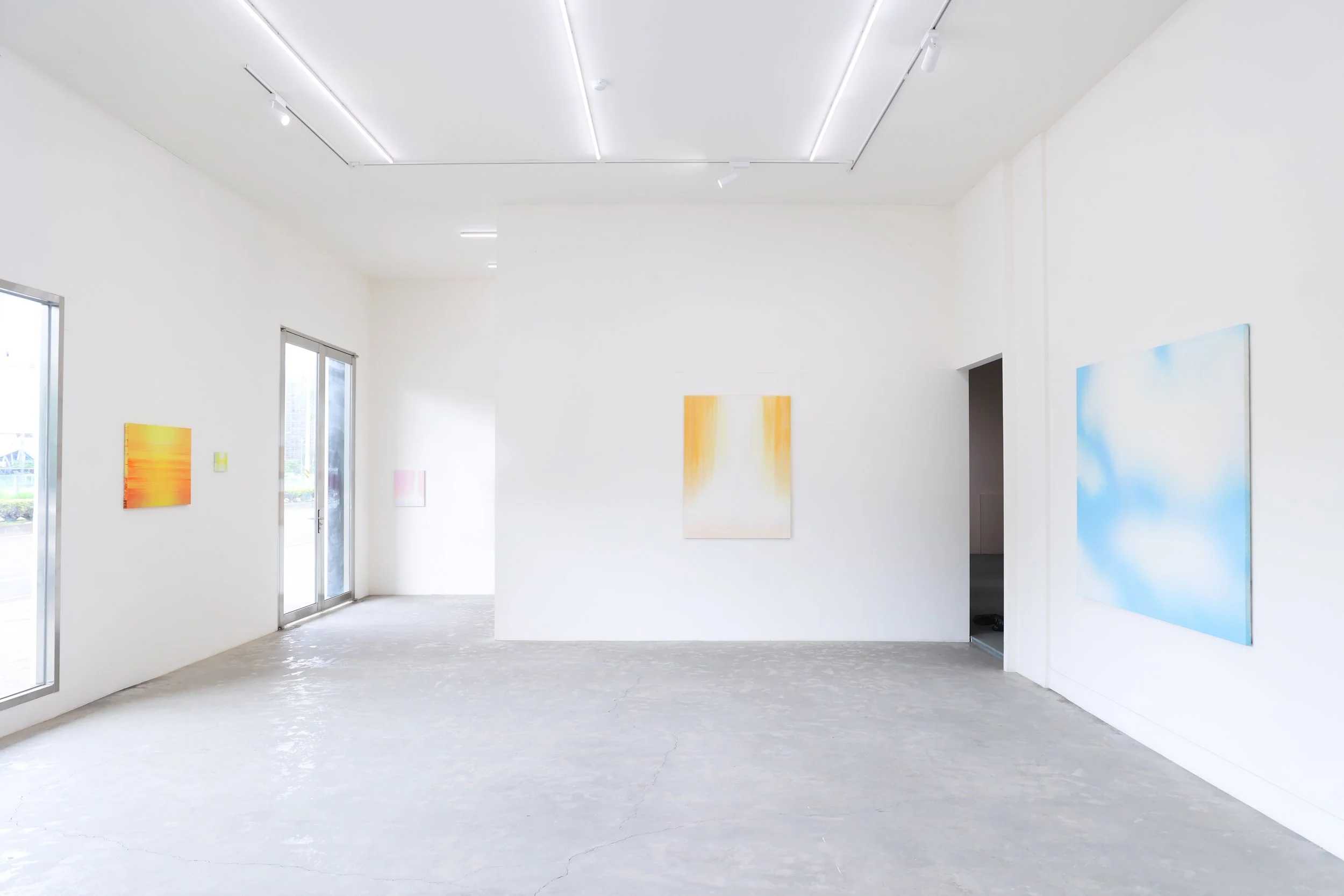
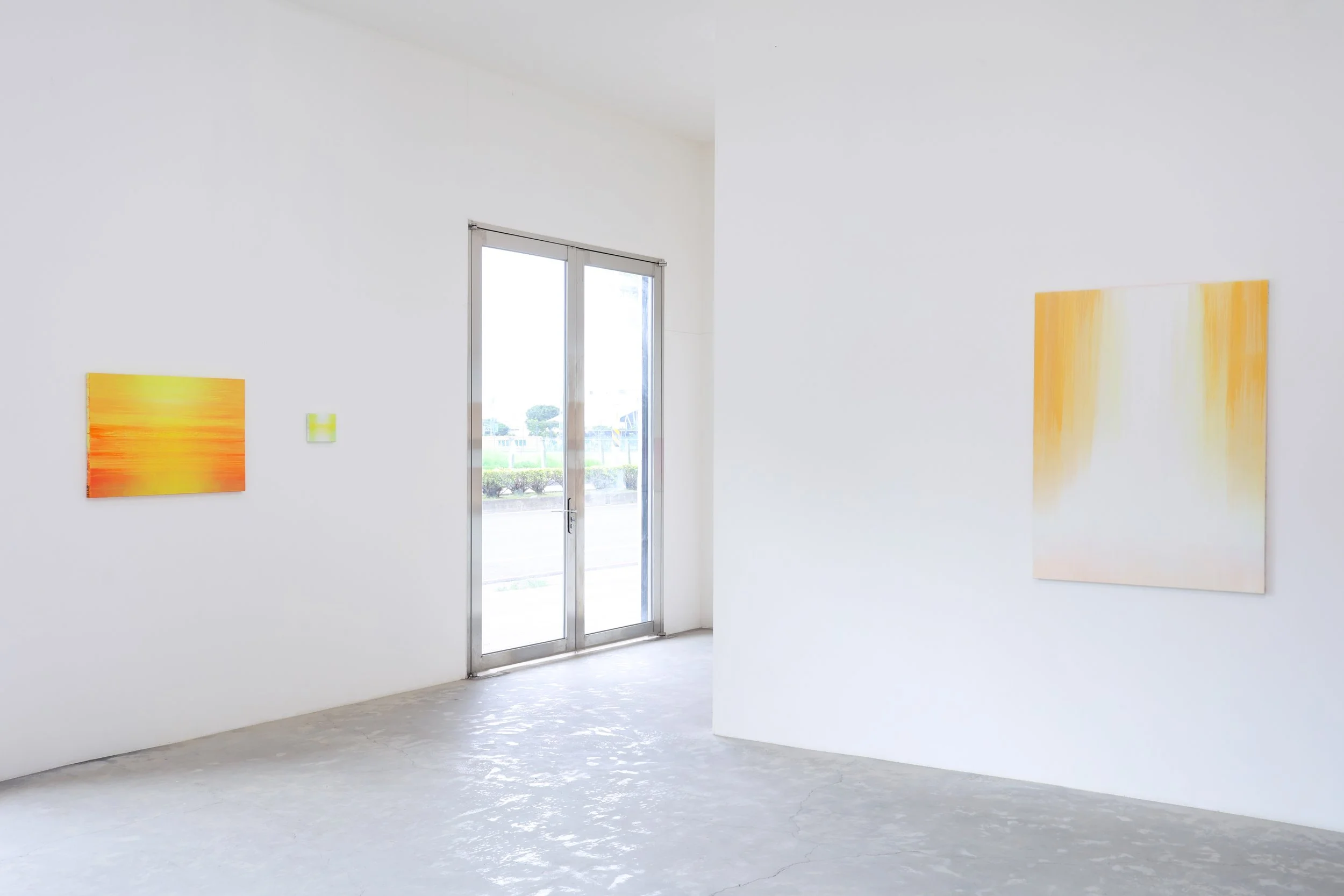
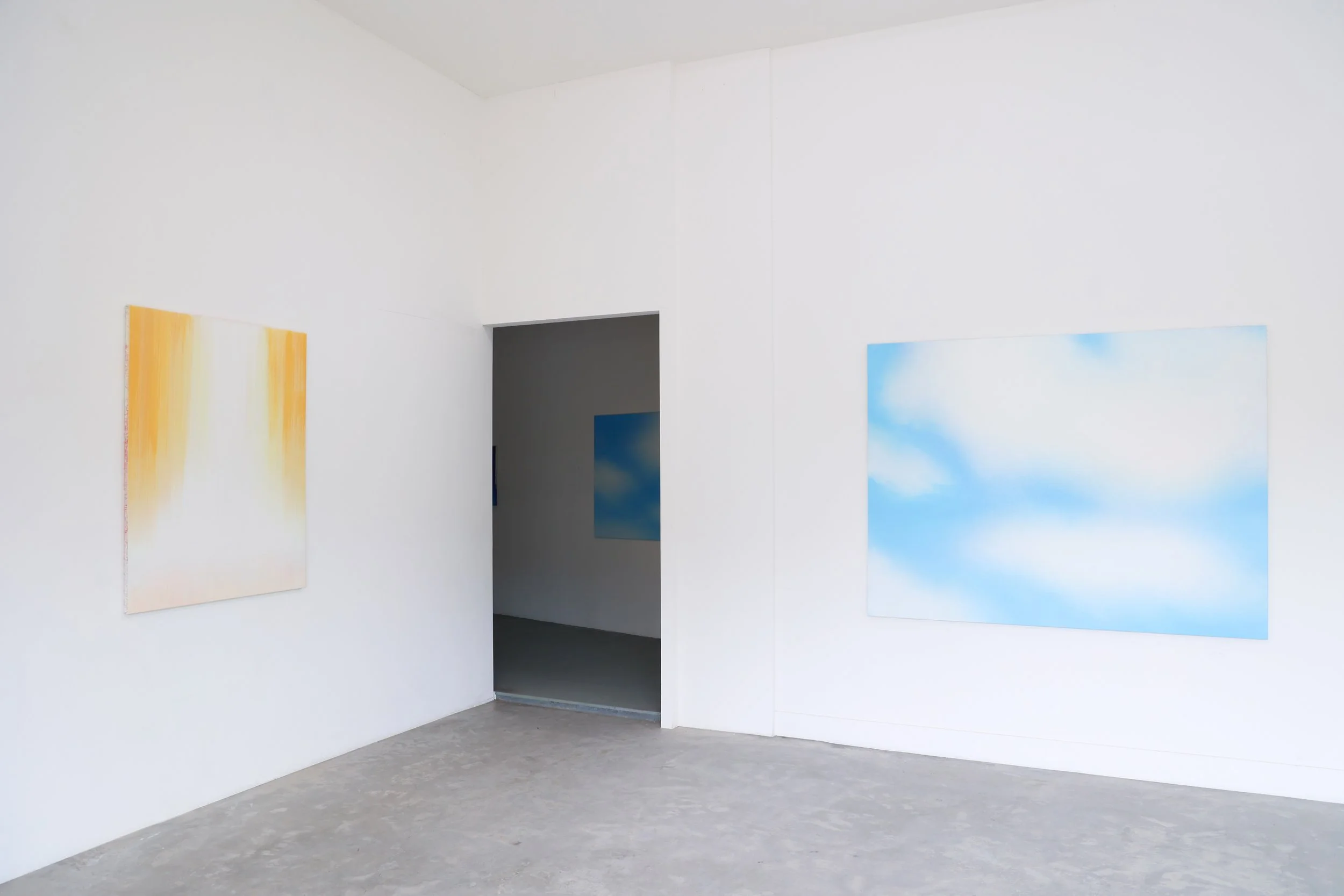
Map coordinates, the contours of mountains and seas, and the shifting seasons—these tangible forms anchor our understanding of a landscape. Yet, is 'landscape' merely an objective projection of reality, or is it a construct of subjective consciousness?
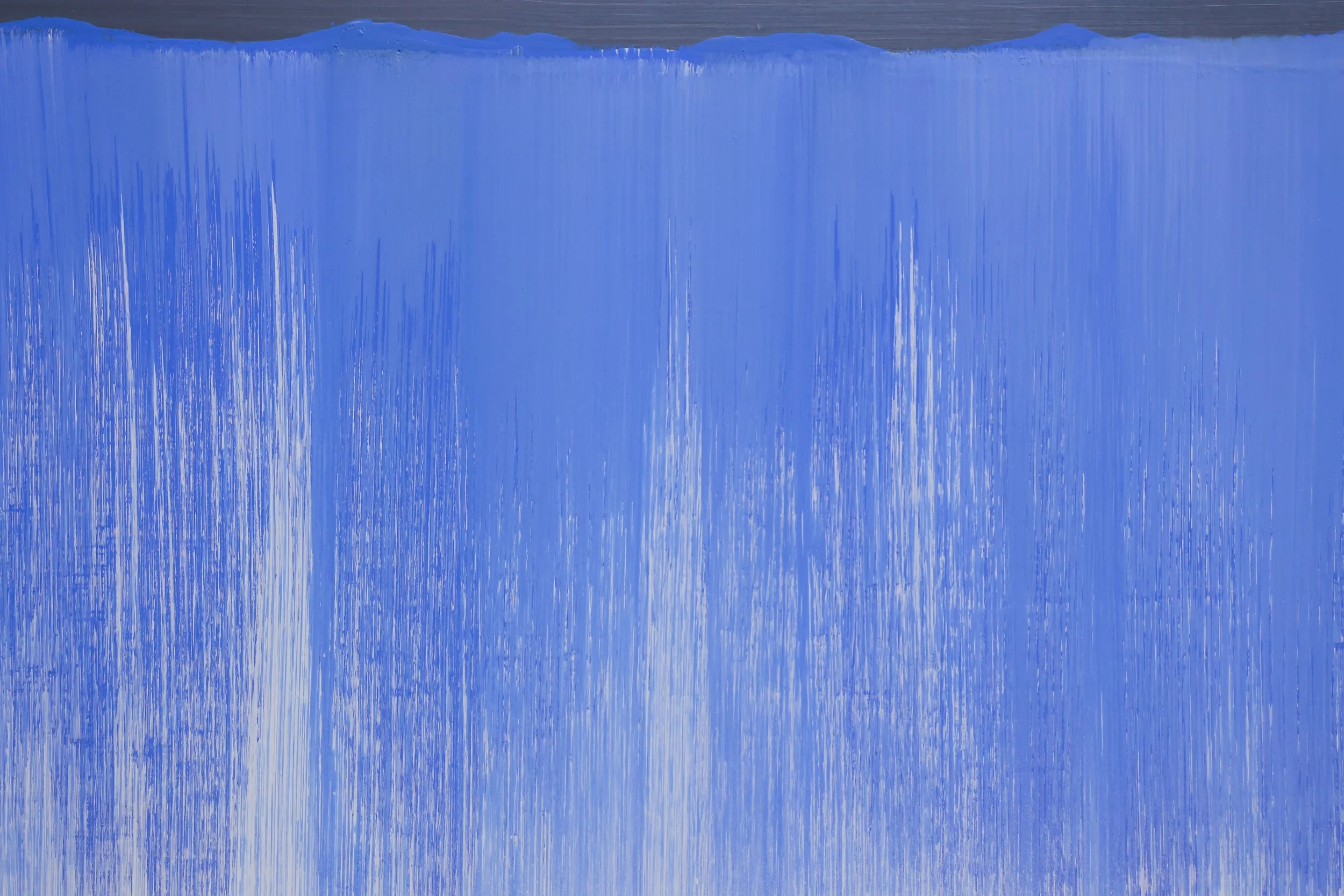
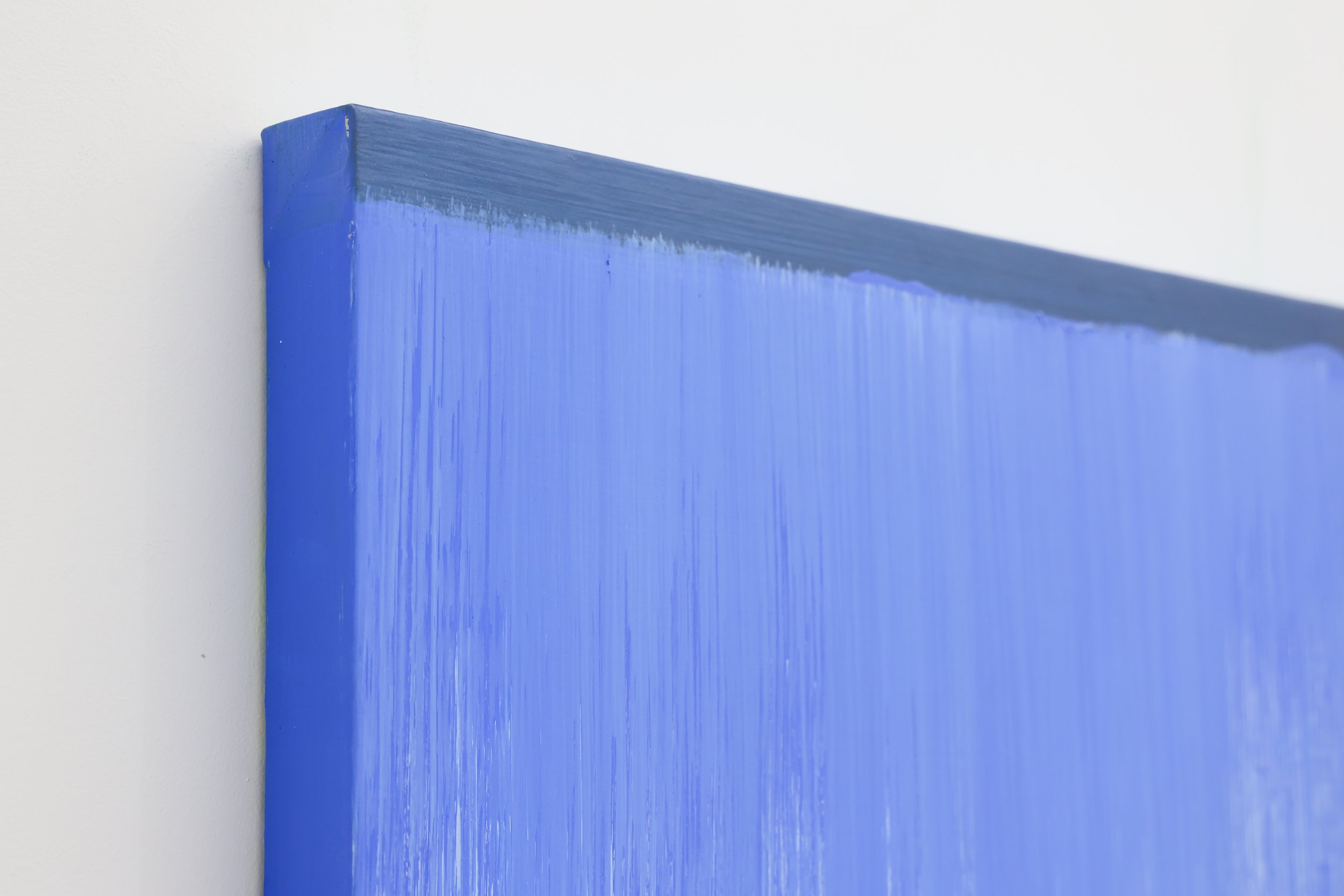
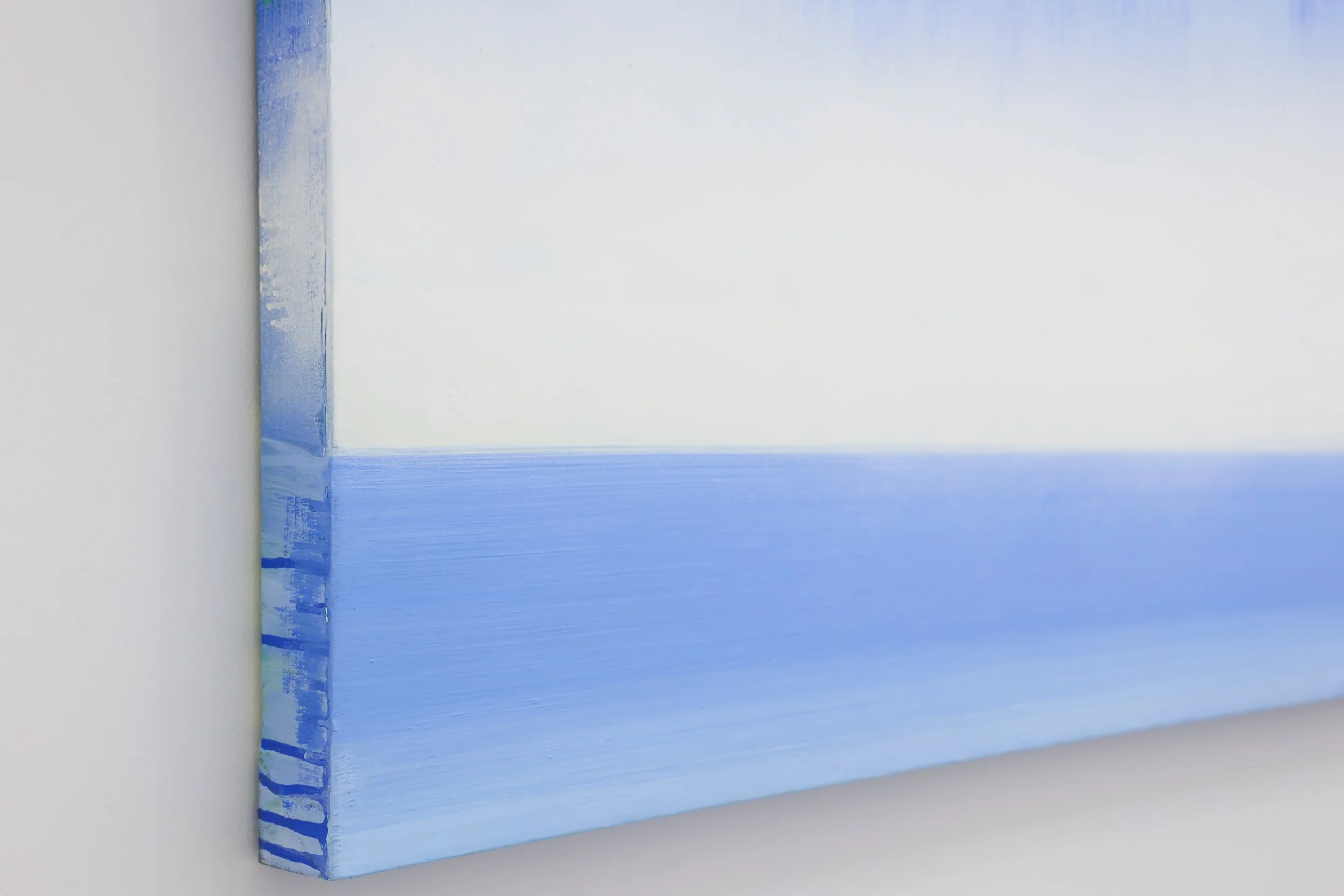
Artist Chinhsiang Liao’s solo exhibition, The Unreached Landscape, presents his recent series created between 2024 and 2025: 'Coastline', 'Sound of Water', 'Rain', and 'Distant Mountains'. Although titled after natural phenomena—oceans, flowing water, rain, mist, and peaks—these works delineate places that do not exist on any physical map. For Liao, painting has ceased to be a mere representation of the objective natural world; rather, it is an internal exploration—a continuous process of posing and answering questions that ultimately constructs a visual realm interwoven with perception, memory, and imagination.
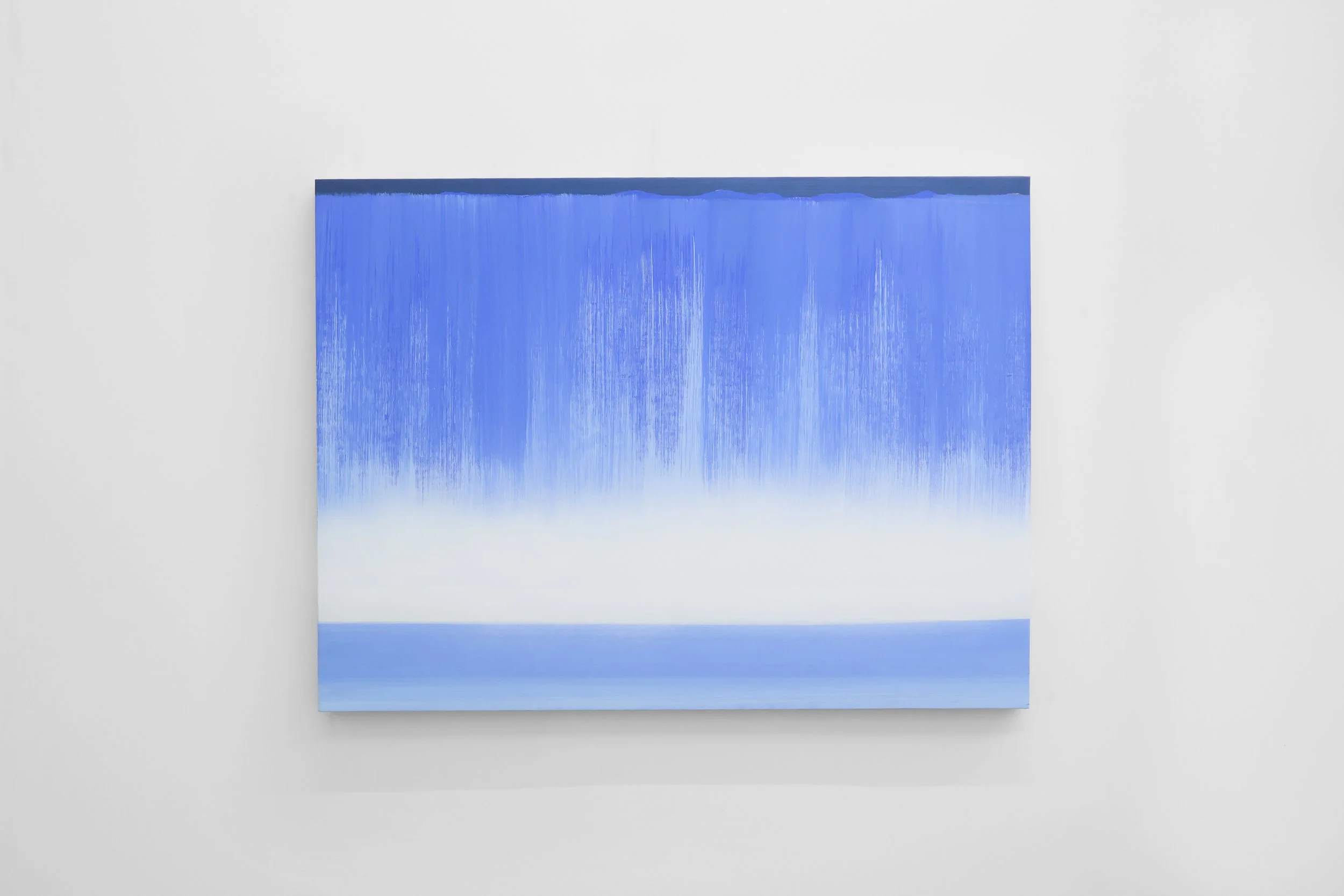
In his practice, Liao employs minimalist lines and repetitive layering as a metric of time, treating the canvas as a sensory site where the body and temporality intersect. Through reiterative gestures, the accumulation and blending of pigments, delicate and drifting brushstrokes, and the rich tactile materiality built up by multiple thin washes of oil paint, he endows the picture plane with a vital rhythm akin to the ebb and flow of tides, or the gathering and dispersing of clouds. These layers—covered, concealed, resurfaced, and revealed—naturally yield subtle 'displacements' within the repetitive act of painting. Physically, this displacement induces a 'perceptual delay'. Amidst the visual dynamics and the rhythmic cadence of the lines, the viewer’s eyes require a moment to focus and adjust when confronting the painting's material surface. It is precisely within this minute temporal gap that the landscape's forms oscillate between ambiguity and clarity; boundaries dissolve into colour, and consciousness subsequently drifts into an alternative spatial dimension.
This painterly language serves as an elegant metaphor for the 'palimpsest' mechanism of human memory. Individual memory is never a static archive, but a dynamic, evolutionary process—continuously buried, overwritten, and leaving behind only fleeting impressions. Liao’s work captures the inevitability of this transience. As viewers stand before his paintings, their collective experiences of 'sea' or 'cloud'—summoned by visual habit—are dismantled and reconstructed before the warm, tactile materiality of the canvas.
Through this painterly dialogue, Liao invites the audience to enter the interstices of sensory experience. The unreached landscape is never an attainable destination; instead, it is a suspended state of preconception—a gaze that remains perpetually open.
地圖上的經緯、山海的輪廓、季節的推移,這些具體的形體座標了我們對風景的認識。然而「風景」究竟是客觀現實的投射,還是主體意識的構造?
藝術家廖進祥的個展《未曾抵達的風景》,呈現其於 2024 至 2025 年間創作的〈海岸線〉、〈水之音〉、〈雨〉與〈遠山〉系列作品。這些作品雖然以海洋、水流、雨霧與群山等自然意象為名,卻不存在於任何現實的地圖上。對廖進祥而言,繪畫不再是對客觀自然的再現,而是一個不斷尋找問題、回答問題的內在探索過程,進而構築出一個由感知、記憶與想像交織而成的視覺場域。
在創作實踐中,廖進祥以低限的「線條」與「反覆塗抹」作為時間的度量衡,將畫布視為身體與時間交疊的感官現場。他透過在畫布上反覆的動作、顏料的堆疊與交融、細膩而游移的筆觸,以及多層薄塗油彩所形成的豐富肌理,使畫面呈現出如潮汐流動、雲霧聚散般的生命節奏。這些被覆蓋、隱藏、重現與顯露的層次,在反覆塗抹中自然產生了細微的「錯位」。而這種錯位在物理觀看上形成了一種「感知延宕」,在視覺上的動態與線條的律動中,使觀者的肉眼在面對畫面物質表面時,必須經歷一段時間的聚焦與調整。正是這個微小的時間間隙,讓風景的形體在模糊與清晰之間擺盪,邊界消融於色彩之中,意識也隨之進入另一個空間。
這種繪畫語言巧妙地隱喻了人類記憶的「複寫(Palimpsest)」機制。個體的記憶從非靜態的檔案封存,而是隨時間不斷掩埋、改寫、僅存浮光掠影的動態演化。廖進祥的作品正是捕捉了這種流逝後的必然。觀者面對畫面時,因視覺慣性所調動的「海」或「雲」的集體經驗,在溫潤的物質肌理前被拆解並重組。
廖進祥透過這場繪畫性的對話,邀請觀者進入感官的間隙。未曾抵達的風景從來不是一個可抵達的終點,而是一種懸置了既定認知、始終保持開放的凝視。
Artist
Chinhsiang Liao 廖進祥